Dick Waterman Music Photography: slideshow photograph 1
Dick Waterman Music Photography: slideshow photograph 2
Dick Waterman Music Photography: slideshow photograph 3
Dick Waterman Music Photography: slideshow photograph 4
Dick Waterman Music Photography: slideshow photograph 5

Dick Waterman's Music Photo Blog

William Faulkner meets Muddy Waters . . .

Did you hear the story about William Faulkner meeting Muddy Waters? Well, now I’m not saying for certain that it actually happened but it might have taken place . . . if we allow imagination to roam a bit . . .

It was back in 1950, Faulkner was en route to Stockholm to accept the Nobel Prize when other business brought him to Chicago. A friend took him to the South Side where Waters was playing his blues. Faulkner watched him perform and then Waters was brought to the table and introductions were made.

WF: I understand you’re from Mississippi. I live in Oxford, Lafayette County.

MW: I was born down in Rolling Fork, Sharkey County, but I come up being a man near Clarksdale, Coahoma County.

WF: How long have you lived in Chicago?

 MW: I come up in ’42, after the war started.

WF: Ever think of going back?

 MW: Not for a minute. I got a lot of things out of Mississippi, but the bestest thing that I got out of there was me. Say, looka here, can I get you something to drink?

 WF: Nothing for me. What’s that you’re drinking?

MW: Well, I like whiskey most of the year but come summer, I got to go off the hard stuff and get me something lighter.

WF: So you switch to gin?

MW: Naw, maybe just a beer. It gets so closed up hot around here in August, I got to go for a light one.

 WF: Hmm, a light in August? I’ll have to give that some thought.

 MW: The fellow that brought you said you getting some prize for doin’ books. Where do you do your writin’?

 WF: I just go back to Rowan Oak.

MW: Back to rowin’ what? Man, that’s a hard wood. You should set yourself to rowin’ something soft, like pine. The oak will jus’ wear you down and you ain’t but a peckish lookin’ man from the start.

 WF: I enjoyed your song about being a hoochie coochie man. How exactly does someone go about becoming a hoochie coochie man?

 MW: Well, it’s best if you come by it in a na’chul way. Is you the seventh son of a seventh son?

 WF: Uh… no.  Actually I come from a rather small family.

 MW: Was you born on the seventh hour of the seventh day of the seventh month?

 WF: No, my birthday is in September.

 MW: Well, it don’t matter that much anyway. Bein’ a hoochie coochie man is jus’ tellin’ people that they best not be messin’ around with you. If you go to thinkin’ that you the best book writin’ man in town, then you can go to tellin’ folks that you the hoochie coochie man at what you do.

 WF: I notice that this blues music that you do is melancholy in nature, but you don’t seem to be burdened. It apparently has a cathartic effect of purging the plight of your misery.

 MW: I don’t follow them words, but you right in sayin’ that singin’ the blues gets me to be feelin’ better. I put it all down in my songs. It’s a hard life and folks are always comin’ ’round and tryin’ to crush you spirit, but I don’t pay them no mind. As long as I can have some satisfaction comin’ to me, these blues will carry us on forever.

 WF: In other words, you’re saying that you decline to accept the end of men.

 MW: When times get hard, it’s singin’ the blues that gets you on by the worst part. But it ain’t enough to let your mind stay in one place. You got to feel that you can come up on your troubles and then move on down the road to somethin’ better.

WF: You mean that man will not merely endure, but that he will prevail.

 MW: The blues come from hard times, and I sure come from a long line of that. There ain’t never going’ to be a time when blues is done. Folks always got bad times at their door and they’ll be blues singers comin’ along behind me forever.

 WF: Now I understand. The blues singer is immortal, not because he alone among creatures has an inexhaustible voice, but because he has a soul, a spirit capable of compassion and sacrifice and endurance.

 MW: Now you talkin’. Now you got them blues right!

 WF: Has anyone got a napkin? I’ve got to write this down.


A singer of songs . . .

Last Friday was Bonnie Raitt’s birthday (63) and I promised that I’d have a few thoughts on the lady. I remember the exact date that I first met here. It was February 8, 1968, and my friend Jack Viertel (then a student at Harvard) came by my house in Cambridge to spend some time with the great blues singer, Son House, who had just come back from a tour. He brought along a young red headed Radcliffe (i.e. also Harvard) student and I recognized the name immediately. I was a huge fan of her father, John Raitt, a Broadway legend of the highest order.

People has the impression that Bonnie came into the blues world because of me but that is not true. She had seen many blues artists in the Los Angeles area and she had learned to play every lick on the “Blues at Newport” album.

What I did do was introduce her to blues artists and then she was on her own to absorb what they were doing. I remember when she met Muddy Waters and he would later slyly acknowledge that he had seen her come into where he was playing by starting “She’s Nineteen Years Old.”

She was simply destined to have a music career and that was apparent right from the beginning. She played a coffee house in Philadelphia by the name of “The Second Fret” opening for a band named Sweet Stavin’ Chain. They were being paid 60% of the door (four night gig) and she was getting 10%.

The total on the door was about $650.00 so the band (about eight or nine members) got around $400.00 to split up and Bonnie got $65.00 for herself. This was big money back in 1968 . . . and so much more appealing than Cambridge classrooms.

Her first major gig was opening for Fred McDowell at The Gaslite on McDougal Street in Greenwich Village. We were stunned when she got a rave review in “The Village Voice” from one Kit Rachlis. We thought that Mister Rachlis was a staff writer at the “Voice” but he turned out to be a 19-year-old Yale student who sent in the unsolicited review on a whim.

I have perhaps been given too much credit for managing Bonnie’s career. I tell them that Son House was tough. Skip James was tough. Working with people who were illiterate was always difficult but guiding Bonnie Raitt’s career was never difficult.

Because she was John Raitt’s daughter . . . and she had grown up in the show business work where the phone rings and everybody loves you when you’re hot . . . when you have a new show, a new album or something fresh coming to the market.

But when you’re in a dry period in your career . . . well, nobody knows you and you languish while the spotlight is on whoever happens to be hot at the time.

So Bonnie never had to be forewarned about that world of false flattery and people hanging around just to ride with a winner. She knew it before I ever came into her life and it made my job so much easier.

She’s the smartest music professional that I’ve ever met and she has an astounding ability to retain information that is fed to her. In those days before computers, email, texts and other modern necessities of communication, I would write memos to her filled with things I wanted her to know about finances and details about salaries, taxes, gross income, net after expenses and explain to her why I made booking decisions based on capacities, ticket sales, opening acts, hotel costs and an endless amount of details.

She would never – never – call to discuss these memos with me but weeks (months) later we’d be in a major business meeting with executives and she would have total command of the conversation with instant and full recollection of all the information she had been given.

I want to take a minute here to explain that she has always been an incredibly successful touring artist simply because she knows your town. It is partially because she has been to every city so often but, more important, she can give her audience some stage talk about which favorite restaurant isn’t there any more, where she had a fabulous Mexican lunch, how nice it was to bicycle out by the lake. She knows what hot button political issues are on your plate and what ballot referendums are coming up for a vote. This is never a gimmick with her. It is a connection that she formed with this community some decades ago and she is going to keep up her side of the conversation.

I remember back when her area of the marketplace was crowded and the competition was fierce. But the fighting was done by the agents and the artists themselves remained separate from the intensity. So we look back and think about Minnie Ripperton and Nicolette Larson and Phoebe Snow, talented ladies who have passed away. And Linda Ronstadt and Emmylou Harris and Janis Ian and so many others who were in the scene with her.

Bonnie can still connect with her audiences because they know that the ballads that are wrenching and emotionally moving to them are affecting her the same way. In the early years, it was “I’m Blowing Away” and “Love Has No Pride” and then “Angel From Montgomery” and finally “I Can’t Make You Love Me.” Is it possible to perform a song for years and still have it ‘get to you’ every night? It is if you are not just stopping in town to pick up a check. If you really care for the people who have turned out to support you for all these years then, yes, you give the emotion to them and they give it right back to you.

She has never cheated an audience by giving anything less than everything she can bring. She is the singer who knows that a great song can fill her up and carry her away to that place where she is only there to serve the music.

She becomes the song and the music just takes her over . . . and for over 40 years she has brought you nothing less . . .

George McGovern and B. B. King go to the ballpark . . .

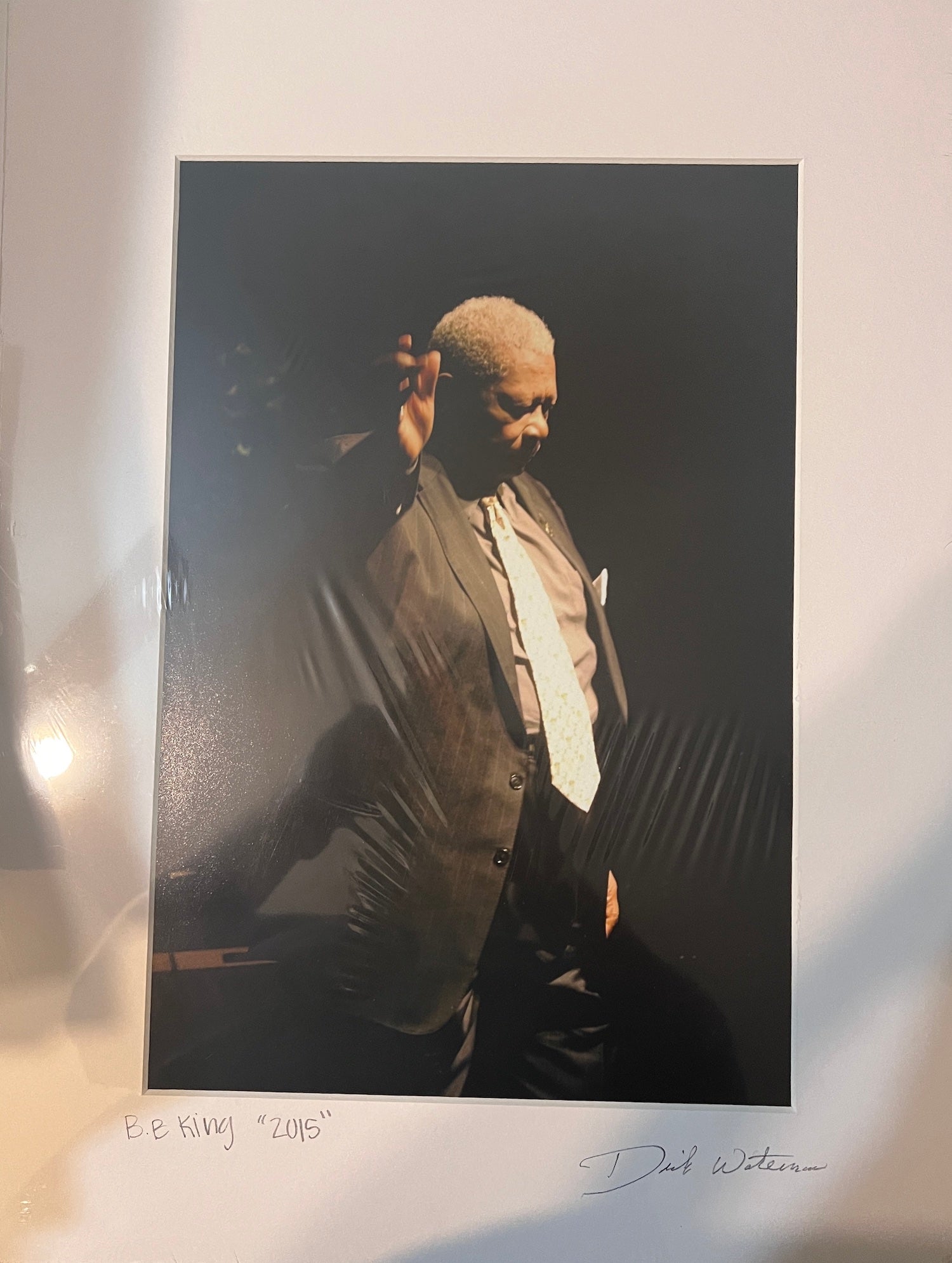
George McGovern passed away recently and this reminded me of the time when he was campaigning for the Presidency in 1972 and came to Boston for a speech at Fenway Park. They asked me to round up some musicians to pay before McGovern took the stage. I grabbed this opportunity to get B.B. King onto the show. He had been playing lounges in Roxbury, a predominately black section of the city, and this would be a great way of helping him cross over to a larger audience.

Fenway Park held about 33,000 for baseball in those days but with seats set up on the field, it was over 40,000 with many more outside the park listening to the huge speakers set up outside the walls.

It was a beautiful night and I remember that B.B. played his recent hits (“Why I Sing the Blues,” “The Thrill is Gone”) and then started to come offstage after about 30 minutes. This was way before cell phones so communication was slow and awkward. Anyway, someone came running up and yelled “McGovern is running late. Keep the music going until he gets here.”

I ran to the front of the stage and yelled up to B.B. that he should keeping playing. Just keep going until I told him to stop. So B.B. started up again and he reached back into his repertoire and pulled songs out of his early recording years. I had heard them before but this audience was getting them for the first time. He did “Sweet Little Angel,” “You Upset Me, Babe,” “Three O’Clock in the Morning” and others from the distant past. He was really into his groove and the crowd was loving every bit of it.

McGovern finally arrived and they opened the big gates in center field for his motorcade to come into the park. I walked over to the visiting team’s dugout and took a seat.

I wish I could say that McGovern really fired up the crowd but this was not true. He delivered his standard stump speech about ending the war in Viet Nam, stop spending huge amounts of money waging war and use it for domestic programs for the poor, etc.

As he spoke, I realized that B.B. was standing a few feet away from me. He had his arms folded and he was listening intently. He genuinely wanted to know why this man wanted to be President.

It is an interesting memory. This black man from rural Mississippi and this white man from the plains of the Dakotas, just a few years apart in age, had come together in a Boston baseball park as one sought to become the President and the other one wanted to hear his reasons for wanting the job.

Brush up on your brush up . . .

I was in London in the early Seventies and wandered into a men’s clothing store. I was probably wearing blue jeans, fringed jacket and sporting my white boy Afro. It didn’t take more than a glance to know that I had made a financial wrong turn but they got me before I could get to the door.

“Might I be of assistance?”

He was impeccably dressed and treated me with great courtesy considering that I was dressed like trash . . . and foreign trash at that.

I eased my way toward a display case that held hair brushes and we inspected the merchandise together. I had so much hair in those days that he probably felt that hedge clippers would have been a better choice. Anyway, I bought a Mason Pearson brush for about fifteen dollars and it was probably one of the better buys of my life.

That brush lasted me for about 40 years. I left it on airplanes, in hotel rooms and in rental cars but it always found its way home. I used to comb out the hair every year or so and it looked like it was going to be mine forever.

So I lost it in such a stupid and simple way. We went to see Bonnie Raitt play in Memphis a few weeks ago and decided to stay overnight there. Driving home the next day, I could not remember if I had packed it in my suitcase.

Not to worry . . . my brush is my brush and it will find its way back to me.

Wrong . . .

Hotel housekeeping said they could not find it and a second call the next day said the same.

Ah well, brush shopping every 40 years can’t be too bad . . .

So I go onto eBay and search for Mason Pearson. I have to be loyal to my brand, right?

The choices are ‘bristle’ or ‘plastic.’

They come in small (children) and large (adult).

The lowest price for the children’s size is $95.00 and the adult size is around $240.00.

So now I have to rethink this brush business. In the past 40 years, I have never had anyone say “Nice brush, Dick.” I might have heard “Nice haircut, Dick” but never a comment about the brush.

So now the harsh edge of reality comes into play.

How deep does my brand loyalty lie? I mean, I don’t have any blood ties to Mason Pearson and it isn’t like I’m going to affect their bottom line.

So the next time you see me, take a look at my hair and see if you notice that I am no longer that Mason Pearson Guy.

I bought a Conair for $4.95 and it seems to work just fine . . .


“Sexy Animal?” I never heard of her!

There used to be a small hotel in London by the name of Blake’s.  It had a celebrity clientele and was known for being complete discreet about who was staying there. It also had an ‘on premises’ liquor license which meant that you could have a drink in their small bar long after public hours had passed.

The people who worked there were totally at ease around any level of movie star or rock icon. They had pretty much seen it all come and go so nothing got them excited.

Except . . .

One day I was passing through the lobby and noticed that the young women at the desk were craning their necks to check out the sidewalk. Obviously, something very important was in the works. Other women came out of the back and whispered, “Is she here yet? Have you seen here?”

OK, I’m certainly curious about who it might be that has the staff at Blake’s so completely unhinged. I walked to the desk and asked, “Are we expecting someone important?”

She looked away quickly and then looked back.

“Emmanuelle

What? Who? Where? How could there be such excitement about a name that I had never heard.

“Who is she?” I asked. “Is she an actress?”

The young woman stared at me and her face was red with embarrassment.

She looked passed me to check the doorway again.

“She makes . . uhh . . sex movies, you know? She is the most sexy animal.”

OK, now I have gone from mild curiosity to complete rapt attention from just those words.

I leaned forward and spoke in a low voice, “An actress by the name of Emmanuelle makes sex movies?”

The answer came quickly.

“No, No .. . this woman . . . she is Emmanelle.”

The door opened and two bell hops came in pushing luggage carriers. They were filled with very expensive French luggage including hat boxes, shoe boxes and cloth containers for gowns hanging from their hooks.

A woman with a denim jacket, thin black jeans and boots that reached above her knees came striding across the lobby. Whoever she was, is was star time, baby . . .

She stood by the desk without speaking while the man accompanying her picked up the room keys and then they headed for the elevator, baggage attendants close behind.

And that, for better or for worse, was my introduction to the world of Emmannelle . . .

Her real name was Sylvia Kristel and she died yesterday at the age of 60 after years of fighting cancer.

She made the first “Emmannuelle” in 1970 and this low budget film shot in Thailand became a sensation in Europe and then spread around the world. It was the story of a sexually voracious woman whose husband encouraged her to seek satisfaction for her desires. She had her way with men of all size, shapes and ethnicity. She was an equal opportunity sexual buffet, there for the taking.

No wonder that young woman everywhere were in awe of her. Oh, to be as free as Emmannuelle.

The first film was such a sensation that it was “Emmannuelle II” and then “III,” “IV” and you take it from there. All the films seem to have been shot in Thailand but, who knows, they could have been shot anywhere since bedrooms were the basic scenery.

I never read anything about Ms Kristel’s personal life away from her libidinous screen character. But perhaps that all for the better.

Sometimes all you ever want to know about a movie star is the way that people act when she walks across a hotel lobby . . .